Define the purchasing requirement
A summer trial does not establish that the same PAM preparation and treatment response will hold in winter. Cold-condition purchasing should examine both polymer solution development and the water-treatment sequence. Temperature is a trial condition, not a standalone grade specification.
State the treated-water destination and the actual measurement used for acceptance. Keep untested water conditions outside the initial approval rather than extending a sample result to every future operating state.
Use the actual winter water
Record source and preparation-water temperatures separately with chemistry and suspended-solids conditions. Avoid warming one candidate sample while leaving the reference cold. State whether laboratory equilibration differs from plant operation.
The preparation guide provides the variables that must remain traceable.
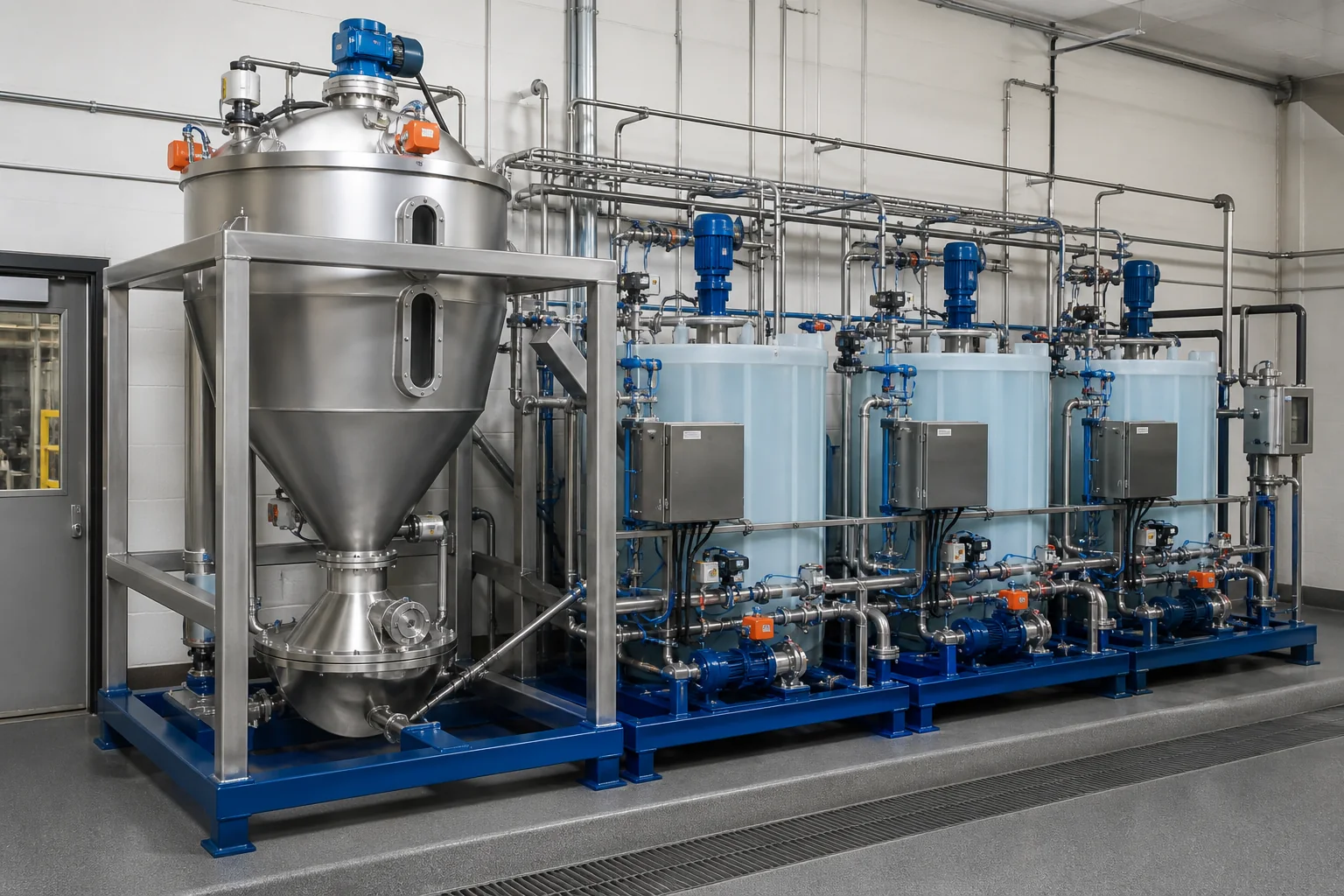
Check usable make-down capacity
Compare wetting, aging and pumpability under supplier-reviewed conditions. Calculate usable residence time at winter demand and inspect any short-circuit or low-level effects.
Do not compensate for incomplete hydration by quietly increasing polymer feed. An equipment bottleneck should appear in the purchase and operating scope.
Measure the complete cold response
Run matched dose and mixing comparisons and allow the defined observation time. Compare settling, clarified-water quality and relevant filter behavior. Carry leading candidates into feasible plant confirmation.
Require a bounded winter operating range rather than a generic cold-water label with no preparation or process evidence.
Resolve the limiting condition
If a candidate performs well only after prolonged hand preparation, it has not passed a short-residence plant make-down system. Reproduce the installed limitation before awarding the winter supply.
Keep the incumbent or untreated reference in the comparison and record measurement timing. A repeat trial is preferable to a confident product ranking when observed differences are within sampling or instrument variability.
Record the release conditions
| Purchase check | Required evidence | Approval boundary |
|---|---|---|
| Temperature | Source and preparation record | Actual cold conditions |
| Capacity | Wetting and usable aging | Plant can reproduce trial |
| Response | Timed water and filter data | Winter scope demonstrated |
Connect the accepted sample, commercial product code, preparation method and operating window. Preserve both failed and acceptable conditions so purchasing can distinguish a bounded recommendation from an unrestricted performance claim.
Request a focused proposal
Send winter temperatures, make-down volumes and rates, chemistry, incumbent dose and water targets. Ask for a candidate trial that identifies preparation limitations separately from grade selection.
Send the water-treatment PAM sample and quotation request and review quality and delivery requirements with Gongyi Xinqi Polymer Co., Ltd.. Confirm the offered grade and documentation before placing an order.