
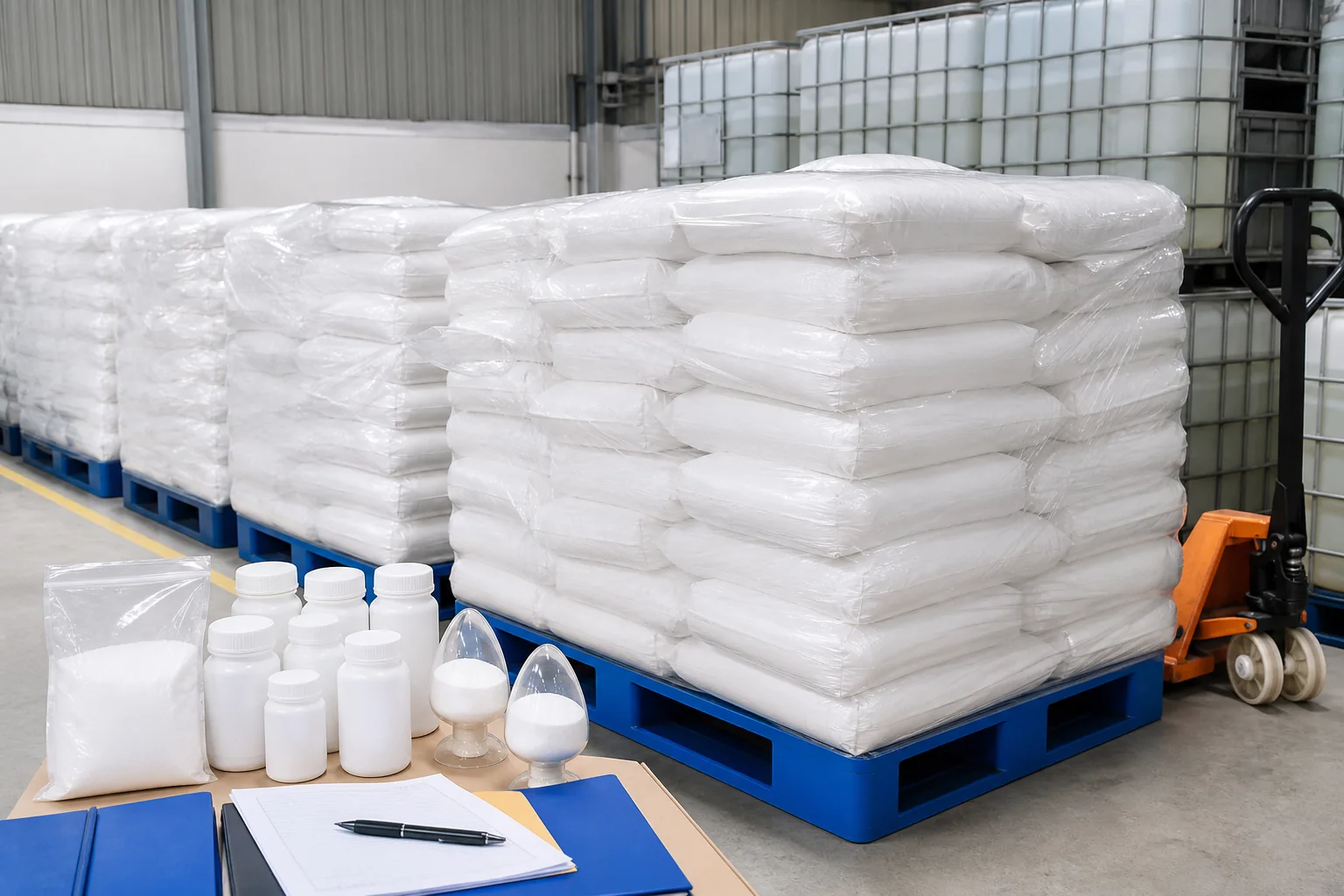
Define the purchasing requirement
A bulk purchase should protect product identity and dry condition from dispatch through the dosing hopper. Specify what the destination can unload and store before selecting a package or delivery size. Do not assume a larger shipment is automatically cheaper once damage and turnover are considered.
State the treated-water destination and the actual measurement used for acceptance. Keep untested water conditions outside the initial approval rather than extending a sample result to every future operating state.
Define package and delivery scope
Agree net mass, package format, pallet protection where offered, quantity and destination handling. Compare delivery terms on the same basis and identify who provides transport and import documents.
Ask for confirmed offered options rather than writing unsupported standard bag sizes, lead times or stock claims into an order.
Protect the warehouse route
Check covered dry storage, floor conditions, package seals and practical stock rotation. Follow the exact product SDS and supplier storage guidance for handling and cleanup. Avoid introducing wet or unidentified material into preparation equipment.
The quality and supply record connects storage control with receiving release.
Release by identity and condition
Match product and lot codes across packages, COA and shipping records. Record damaged or wet packages, retain relevant evidence and hold discrepancies. Agree the first-lot performance check before routine consumption.
A shipping document proves movement of goods, not that the lot matches the accepted sample or remains suitable after moisture exposure.
Resolve the limiting condition
If a consignment arrives with mixed unlisted lot codes or torn damp bags, segregate the affected material. Resolve identity and condition instead of blending it into a large hopper to hide the discrepancy.
Keep the incumbent or untreated reference in the comparison and record measurement timing. A repeat trial is preferable to a confident product ranking when observed differences are within sampling or instrument variability.
Record the release conditions
| Purchase check | Required evidence | Approval boundary |
|---|---|---|
| Shipment | Net mass, term and package | Scope comparable |
| Storage | Dry protected turnover | Condition maintained |
| Release | Lot, documents and inspection | Exceptions held |
Connect the accepted sample, commercial product code, preparation method and operating window. Preserve both failed and acceptable conditions so purchasing can distinguish a bounded recommendation from an unrestricted performance claim.
Request a focused proposal
Send consumption forecast, unloading method, storage capacity and destination. Request a delivery proposal with traceable lots and a receiving process compatible with the plant, without assuming unconfirmed stock availability.
Send the water-treatment PAM sample and quotation request and review quality and delivery requirements with Gongyi Xinqi Polymer Co., Ltd.. Confirm the offered grade and documentation before placing an order.